
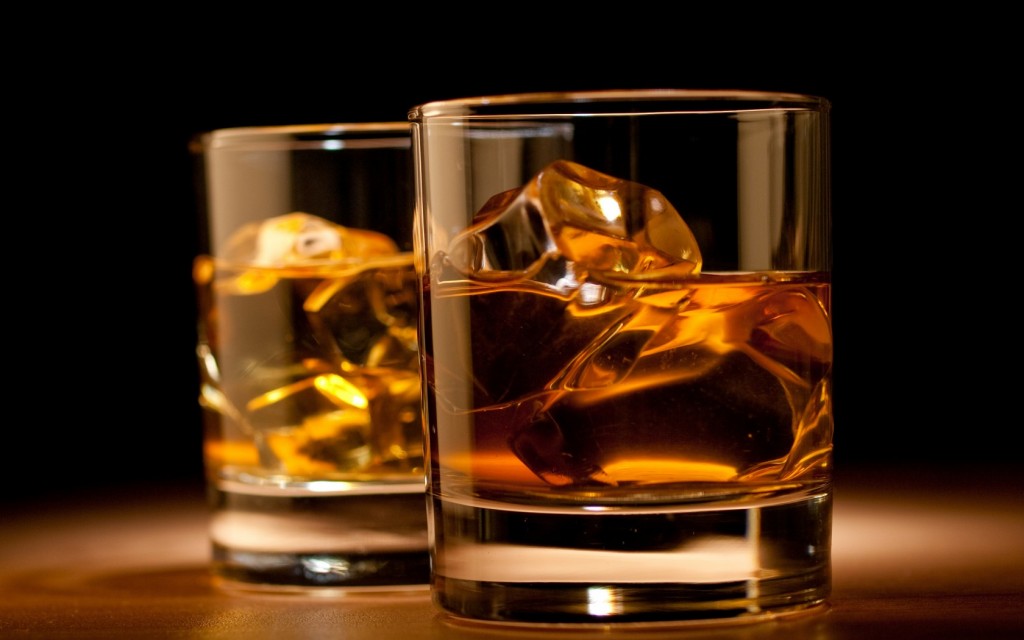
For years, there wasn’t much new or exciting in the world of whiskey. Old bottles collected dust while consumers instead sought out craft beers and wines or resorted to hard liquor standbys like vodka and gin. But that’s started to change. The prototypical whiskey drinker may have once been an older gentleman enjoying an afternoon Scotch-on-the-rocks, but bourbon and whiskey hold a growing appeal to young people and women, says Credit Suisse spirits analyst Kieran McGrath.
The whiskey renaissance is part a larger shift among U.S. consumers toward hard liquor. Spirits have climbed from less than 29 percent of total alcohol sales in 2000 to a record high of nearly 35 percent in 2013. Americans are consuming about 30 percent more spirits than they did two decades ago, while total alcohol consumption has only increased 8 percent, according to the National Institute on Alcohol Abuse and Alcoholism. And according to a recent Gallup poll, more than twice as many 18—29 year olds prefer liquor today than in the mid-90s.
The total value of vodka sales jumped 50.6 percent between 2002 and 2010, according to the Distilled Spirits Council, or DISCUS. But that run is officially over, as whiskey and bourbon accounted for 80 percent of all 2013 sales growth in U.S. spirits. Vodka revenues grew just 1.1 percent in 2013, while gin sales fell 3.8 percent, DISCUS data shows. And it’s not just the cheap stuff that’s selling, McGrath says, pointing to the fact that the number of cases of super-premium bourbon sold rose from 662,000 in 2008 to 1.23 million in 2013.
The big winners of late are those companies that specialize in brown spirits, such as Beam Inc., which makes Jim Beam, Maker’s Mark, Knob Creek, and Laphroaig, as well as Kentucky-based Brown Forman, which makes Jack Daniels. On June 4, Brown Forman said that fiscal fourth quarter sales rose 3.1 percent to $389 million, while earnings soared 17 percent to $132 million.
