
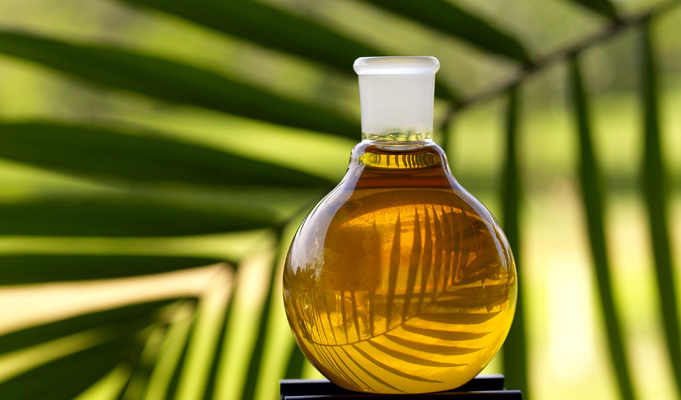
The ubiquity of palm oil, which appears in everything from margarine to lipstick, is now widely recognised. So too are the detrimental effects of palm oil plantations on the world’s remaining rainforests. So why do we keep using it?
The simple answer is it’s just too good at what it does. Its versatility comes down to two main stellar properties: an exceptionally high melting point and very high saturation levels. Some vegetable oils get close to one of the two, but none to both.
Now researchers at the University of Bath believe they may have hit on an alternative: yeast. A three-year research programme between the university’s biochemistry and chemical engineering faculties has successfully cultivated an oily yeast that matches palm oil’s key properties almost identically.
Early laboratory tests in a shake flask show that the yeast Metschnikowia pulcherrima – historically known for its use in South Africa’s wine industry – can produce up to 20 grams per litre of oil, giving it a similar lipid profile to palm oil. Among its other selling points, M. pulcherrima can be found pretty much anywhere, including on a huge variety of tree leaves, fruits and flowers. Initial bio-prospecting efforts have turned up strains in Vietnam, South Africa, Italy, France – and fortuitously even on the University of Bath’s own campus.
Another singularity of M pulcherrima is its ability to grow on pretty much any organic feedstock. It’s hoped that waste from the process can feasibly be recycled as a feedstock as well, helping close the loop in the supply chain.
“Irrespective of what you are putting in at the start, whether it’s rapeseed, straw or waste food, M pulcherrima can use the sugars in it and grow on it”, says Dr Chris Chuck, research fellow at Bath’s Centre for Sustainable Chemical Technologies and co-lead on the project. Chuck estimates that the land use requirement for commercial yeast production could be 10 or even 100 times less than palm oil.
That will please those concerned about food security as well as the environment, because palm oil plantations are not only credited with widespread deforestation – their ubiquity in tropical regions is also blamed for occupying agricultural land and pushing up food prices as a result.
“Technologies which can produce useable oil from waste and so don’t compete for dedicated farmland look much more promising, and this work appears to bring one of those technologies closer to reality”, says Dr Doug Parr, chief scientist at Greenpeace UK.
(via TheGuardian)
