
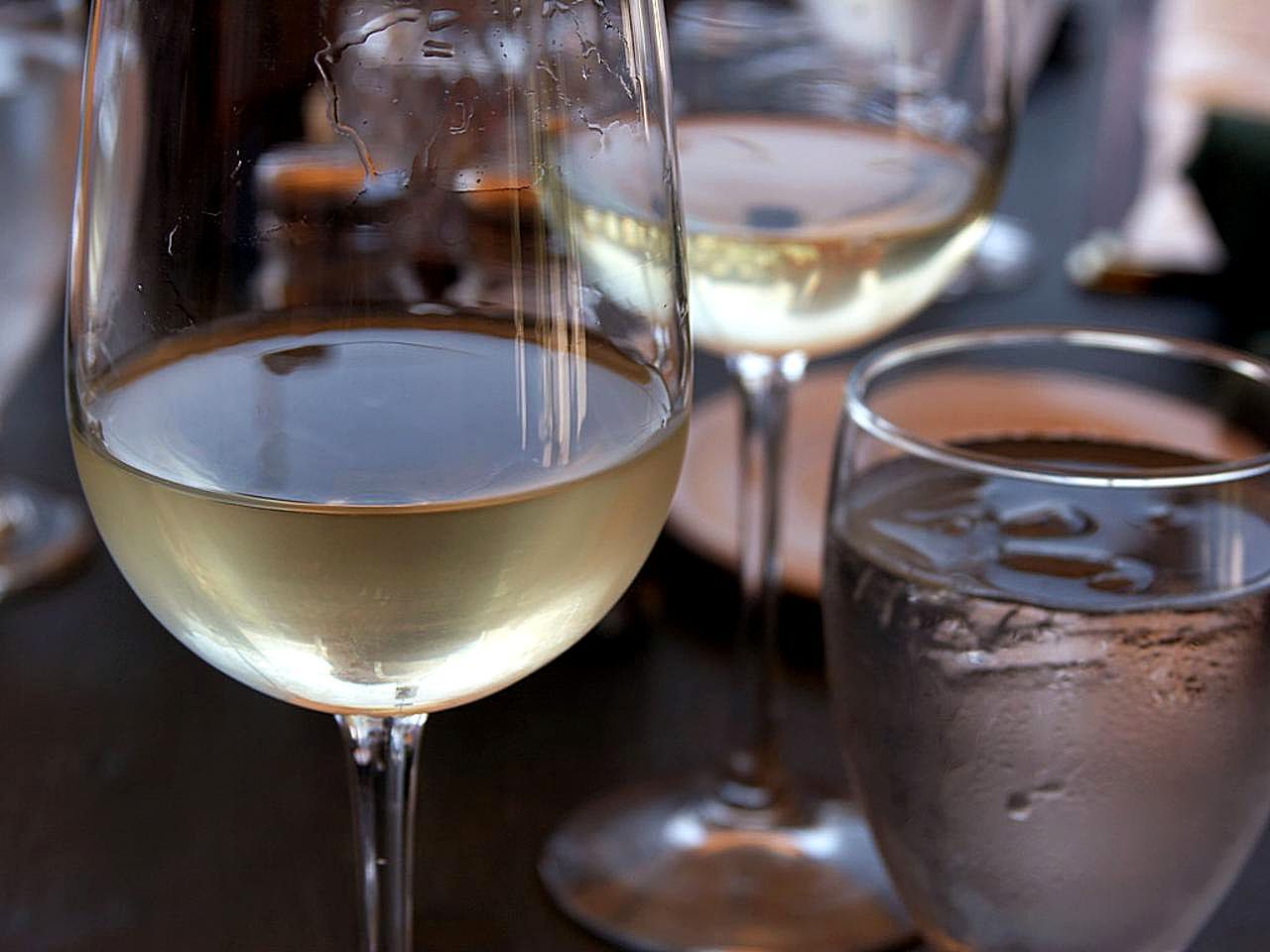
In the glass, a wine's temperature very much matters to your appreciation of it.
That's because the several elements that make up wine — things such as fruit flavors and aromas, alcohol, tannin, wood barrel aging, acidity and body or "heft" — are affected by temperature, in ways that pleasure or don't.
The goal in serving a wine at the correct or ideal temperature is to have all its constituent elements at their best possible showing, as well as in harmony or balance with each other.
For example, the alcohol in a red wine will be overly volatile ("burning") in a red wine served at 24°, typical for many a home dining room, restaurant or BYOB, not to mention outdoor picnic. Too cold, say 15°, and a red wine's tannins are harsh and unyielding; its aromas and flavors, muted.
White wines served straightaway from the refrigerator (4° - 7°) are, by and large, too cold, everything in them except their acidity (and, possibly, their oak character) patted down and muted.
"Cold suppresses fruit," says Greg Brewer, winemaker at Melville Vineyards in the Santa Rita Hills of south-central California.
What to do, then, about proper temperature given the huge variance in wines?
"It really depends upon the wine," says Chris Howell, general manager and winemaker at Cain Vineyard & Winery in Napa Valley. "For white wines," he says, "cool but not too cold" is best. "Really, really good white wine, especially old white wine, could be served the same temperature as a red wine.
For red wines, Howell sends these guidelines: "Fine wine at 15° - 18°; high octane 'big reds' at 13° - 15°; 'refreshment wine' such as Chianti or Beaujolais at 13°." Note that Howell recommends serving no red wine, whatever its provenance, cost, age or character, above 18°.
The one wine that must be served very, very cold is Champagne or sparkling wine made in the Champagne method. Howell says "2° - 7°." The temperature has more to do with the safety of opening the bottle than anything else (carbon dioxide being tighter in solution at colder temperatures).
