
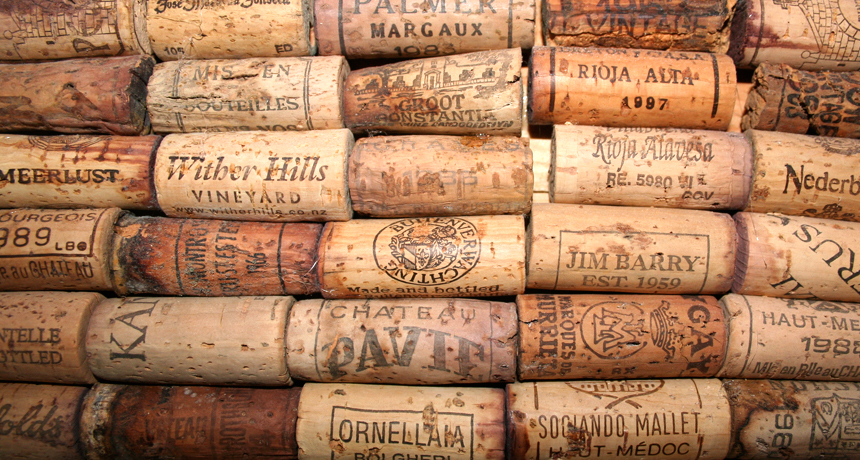
Even the most superb wine won’t last without its cork, but the quality of this renewable oaken resource has nose-dived in recent years. A new genetic study of trees that produce high- and low-quality cork divulges some clues behind this decline, hinting at a possible link to climate change.
A great cork safeguards a wine’s taste and its aging process, while inferior cork can taint the vino’s flavor. Cork is made from the protective outer layer of bark surrounding Quercus suber oak trees, which grow only in southwest Europe and northwest Africa. But the global supply of cork, a $2 billion industry, has faced problems with quality and competition. Synthetic wine stoppers and metal caps offer a cheap alternative and have boomed in popularity in recent years, but oaken corks are still preferred by wine aficionados.
“Cork quality has been decreasing over the years, no one knows why,” says Rita Teixeira of the University of Lisbon. “Producing a fruitful cork tree takes about 50 years, so it’s urgent that we start studying reasons behind the downturn.”
Industry standards define bad cork as thin layers of bark that possess lots of lenticular channels — little air-penetrating conduits in the plant tissue. Stoppers made from bad cork let more air through than good cork stoppers. If too much oxygen seeps into a wine bottle, it can react with alcohol to form acetic acid, giving the wine the sour taste of vinegar.
“The natural regeneration of the cork oak is slow and can be further affected by climate change,” says plant systems biologist Mónica Sebastiana of the University of Lisbon, who wasn’t involved in the research. “Genetic differences outlined in this study could yield future diagnostic tests for selecting the best plants for breeding programs to increase quality in cork oak groves,” she says.
