
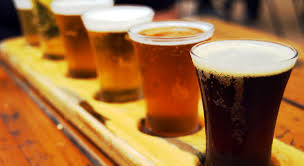
After thousands of years of unwitting domestication, brewing yeasts — the microorganisms that ferment a brewer’s tepid slop of grain, water and hops into beer — are as diverse as the beer they make. And now two research teams, from White Labs and a Belgian genetics laboratory, are mapping out their sprawling genealogy, creating the first genetic family tree for brewing yeasts and the beers they make.
“Yeasts can make over 500 flavor and aroma compounds,” said Chris White, the founder of White Labs, affecting a beer’s alcohol level, clarity and texture. But while brewing yeast is one of the best-studied organisms in molecular and cell biology, exactly how its genes translate to brewing properties is still poorly understood.
The researchers in the Belgian lab — a joint venture of the Flanders Institute for Biotechnology and the University of Leuven, Belgium — have even bigger plans. “With this information, we’ll be able to select different properties in yeasts and breed them together to generate new ones,” Dr. Verstrepen said. “In a few years we might be drinking beers that are far different and more interesting than those that currently exist.”
And while the genetic tools already exist to create new yeasts artificially — by splicing genes from one to another — because of the longstanding stigma associated with genetically modified foods, there is no market for them.
“Right now we have a few hundred genetically modified yeast strains patiently waiting in our laboratory’s freezer,” said Jan Steensels, a microbiologist with the Belgian lab, “but most brewers and consumers don’t want anything to do with them.”
“Until recently, the brewing industry has been remarkably resistant to using the techniques of genetics and molecular biology to improve their brewing strains,” Dr. Schekman said. “It’s long overdue that someone has actually delved into the molecular basis between the differences in brewing strains.”
